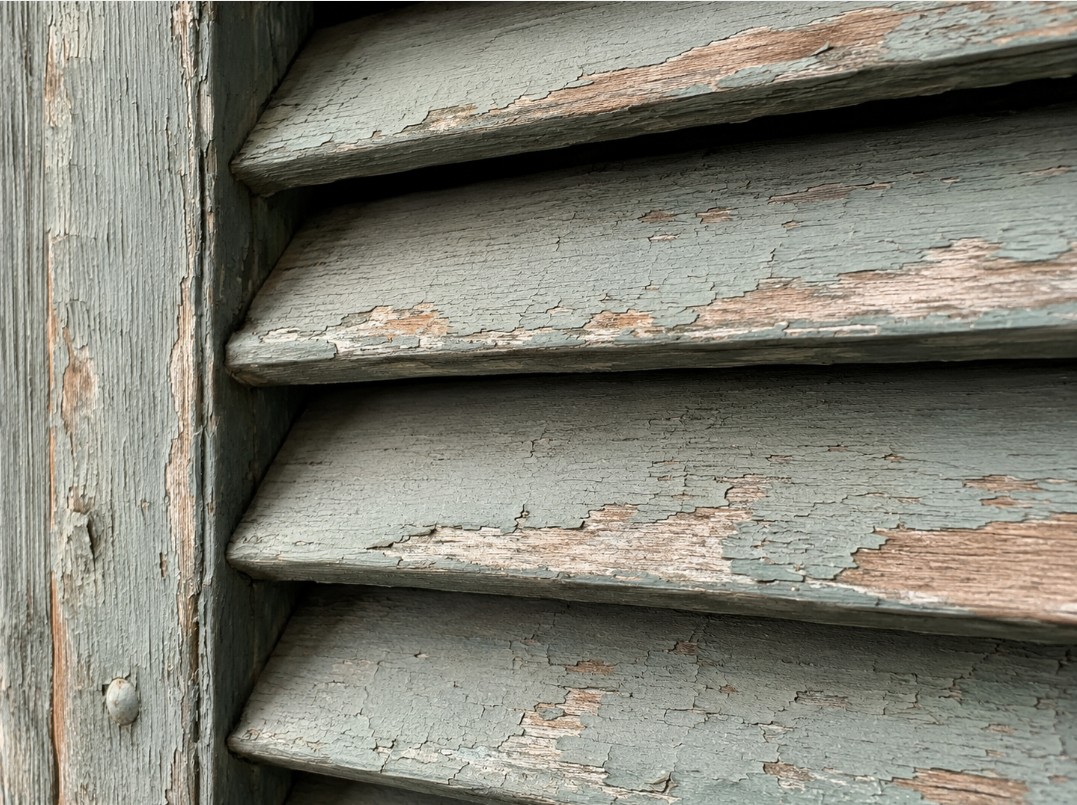

Wooden shutter with flaking paint

Why SEEDS

Paint shouldn't flake

What makes SEEDS different?

Different from what is made today, certainly. New, no: it is the age-old recipe described in the Watin guide (1773).

The Watin guide — L'Art du peintre, doreur et vernisseur (1773, 9th ed. 1823): the age-old recipe that inspires SEEDS.

Film-forming paints create a film on the surface that eventually peels away: under the effect of UV, moisture and time, the paint blisters, cracks and flakes off in patches. The wood is left exposed, and everything has to be stripped back to start over.

We created SEEDS to put an end to this waste. Our linseed-oil paint penetrates the wood instead of coating it: it protects deep down, doesn't flake, and is maintained with a single coat.

The reality: paint flakes

Everywhere, the same story on exterior woodwork.

Gate with flaking paint

Deteriorated gates

Film-forming paints flake under the effect of UV and moisture, leaving the wood with no protection.

Shutters with flaking paint

Damaged shutters

Applying paint over old layers of paint inevitably leads to fresh flaking.

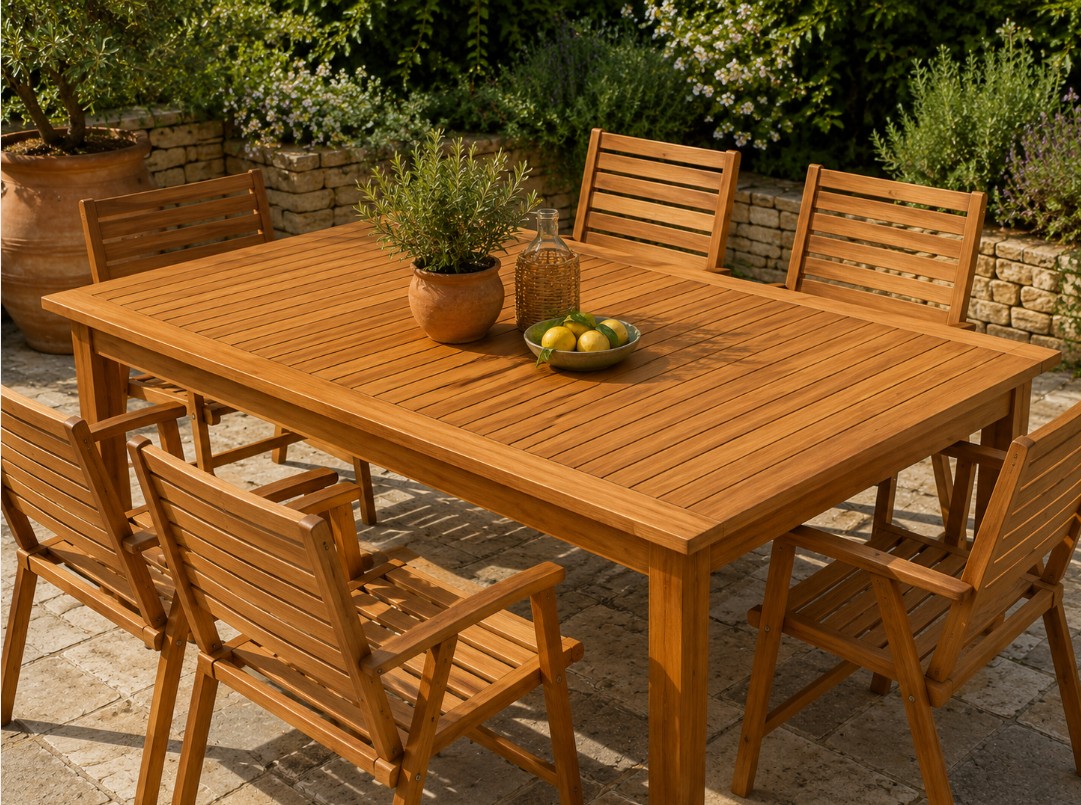
Street furniture with flaking paint

Exposed furniture

Exposed to the elements, varnished surfaces eventually blister and peel away layer after layer.

The explanation: wood expands

Conventional paint

Why does water damage your woodwork?

Even on a thin shutter slat, water always finds a way in… but it can't get back out.
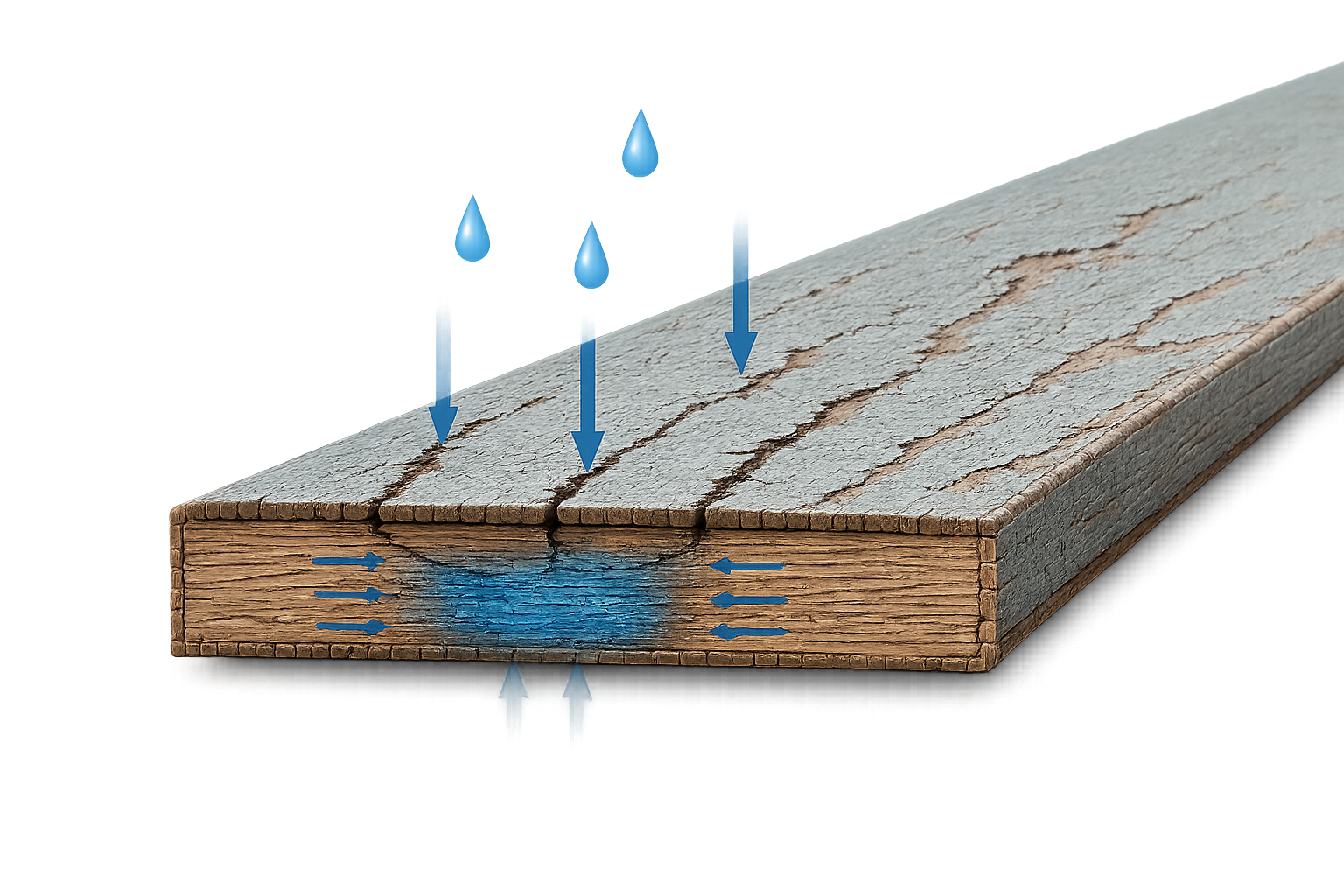
Cross-section of a painted shutter slat: water seeps in from above, spreads by capillary action and stays trapped in the heart of the wood.
1

Water seeps in

Through microcracks, the wood's pores or areas where the paint is damaged, water penetrates the wood.

2

Water spreads by capillary action

It travels through the wood fibres, like through a sponge.

3

Moisture stays trapped

As it tries to get back out, the water meets the intact paint that acts as a barrier. It can no longer evaporate.

4

The wood deteriorates

Trapped moisture causes swelling, cracking, then flaking of the paint. The wood eventually weakens and deteriorates.

In short

Water gets in easily but can't get back out. Over time, the wood deteriorates and the paint flakes.

What you see on the surface

Flaking, blisters, cracks and bare patches: these are the signs that water has got in and stayed trapped.
Paint (even modern acrylic) forms a rigid film on the surface. It's a bit like building a road on sand. If the substrate expands and contracts, you can't expect the surface paint to hold up for long. The film breaks. It's inevitable.

Unless you take advantage of the wood's porosity by applying a paint that truly penetrates the substrate. That's what SEEDS is: a paint that penetrates its support to nourish it and move with it.

We like to use the analogy of a jogger's gear:

"While the manufacturers hand you a K-Way, we suggest running in a sweatshirt."

You don't sweat any differently, but at least the water can escape.

The paint is breathable: in vapour form, moisture draws out through the pores of the wood and passes through the paint.

For reference, dead wood contains between 15 and 20% moisture (varying with the wood and the environment).

With our solution, water escapes naturally and the wood doesn't rot.

The solution: linseed oil on raw wood

Our linseed-oil paint penetrates deep into the wood instead of forming a film on the surface

Deep penetration

Linseed oil penetrates up to 2 mm into the wood, creating lasting protection that doesn't flake.

Raw wood only

Applying it to raw wood guarantees perfect adhesion and optimal protection.

Easy upkeep

A light sanding and a fresh coat of clear oil are all it takes to refresh the protection for 8 years.

Penetration into raw wood

See the difference between untreated raw wood and the same wood after applying our linseed-oil paint

After restoration
Before restoration
Before
After

In this image, you can see the striking difference between untreated raw wood, exposed to the elements, and the same wood after applying our linseed-oil paint. The paint penetrates deep into the wood fibres, creating lasting protection that doesn't flake, unlike traditional film-forming paints.

Easy upkeep

A simple sanding and a fresh coat are enough to restore the protection, with no full stripping

After restoration
Before restoration
Before
After

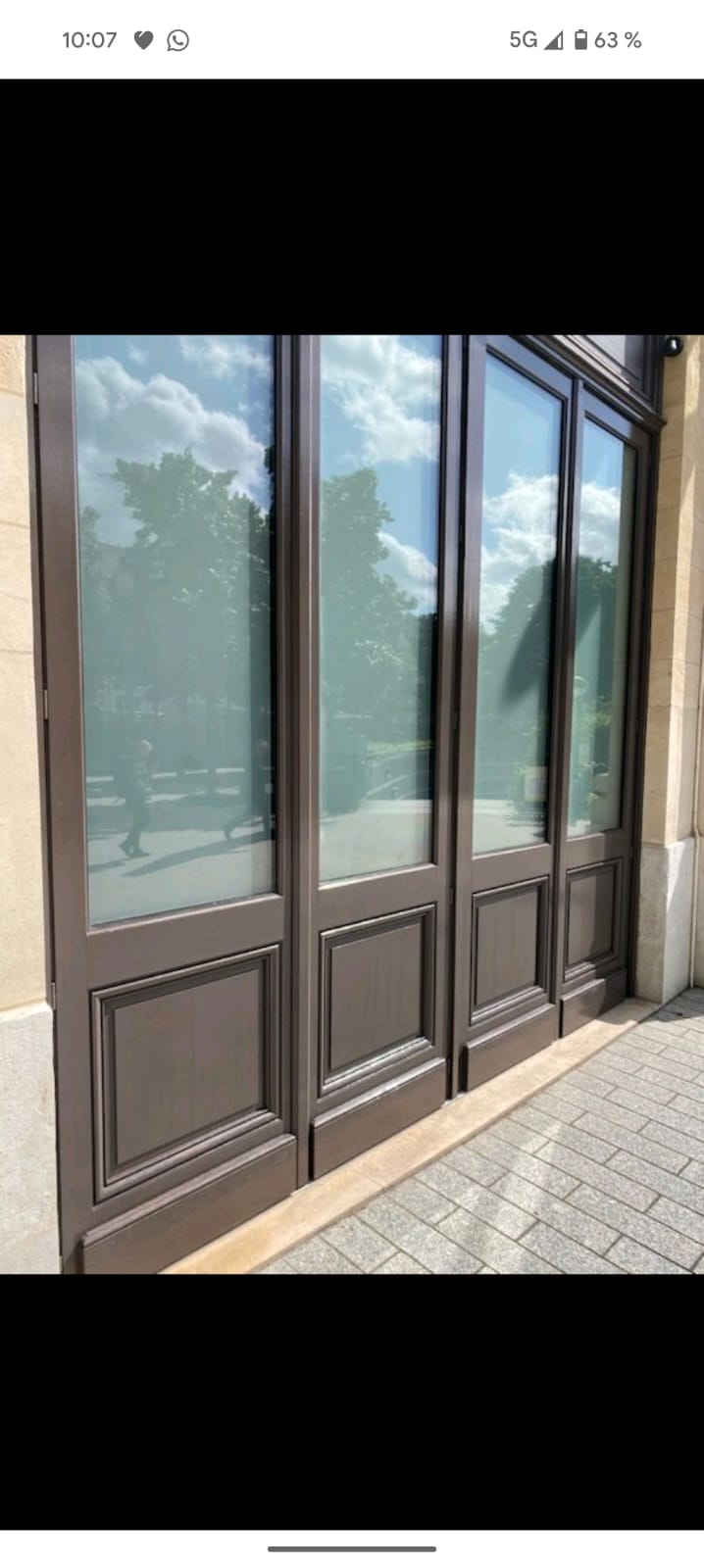
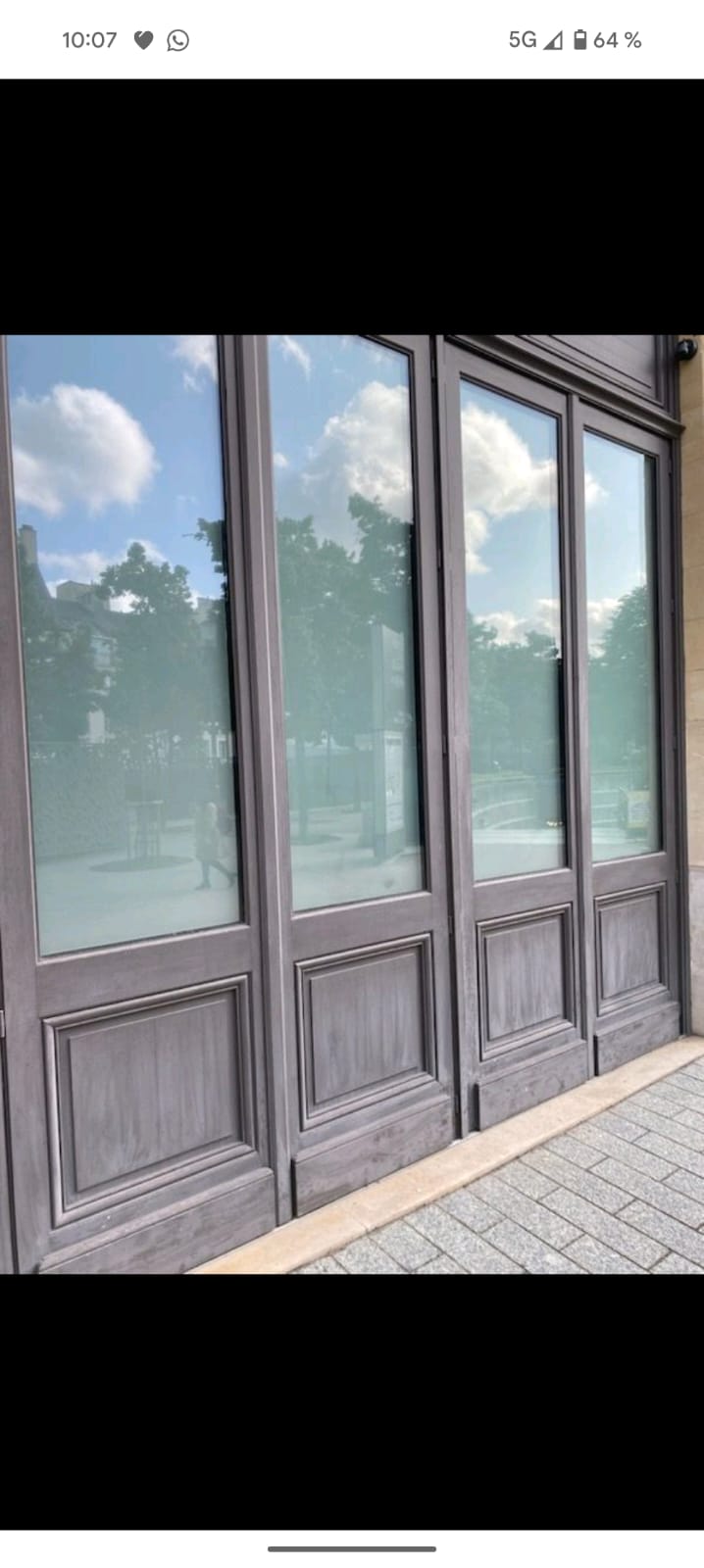
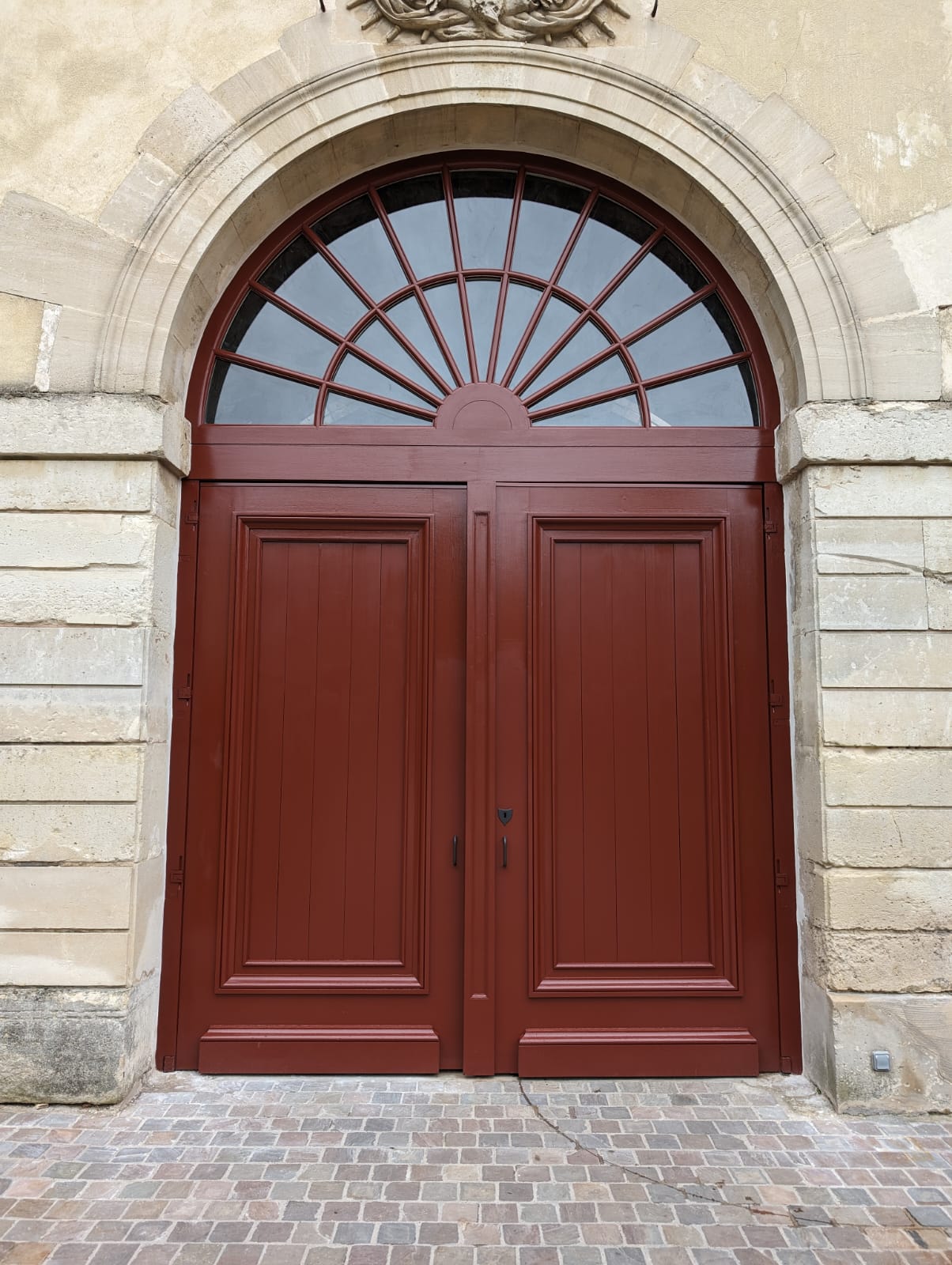
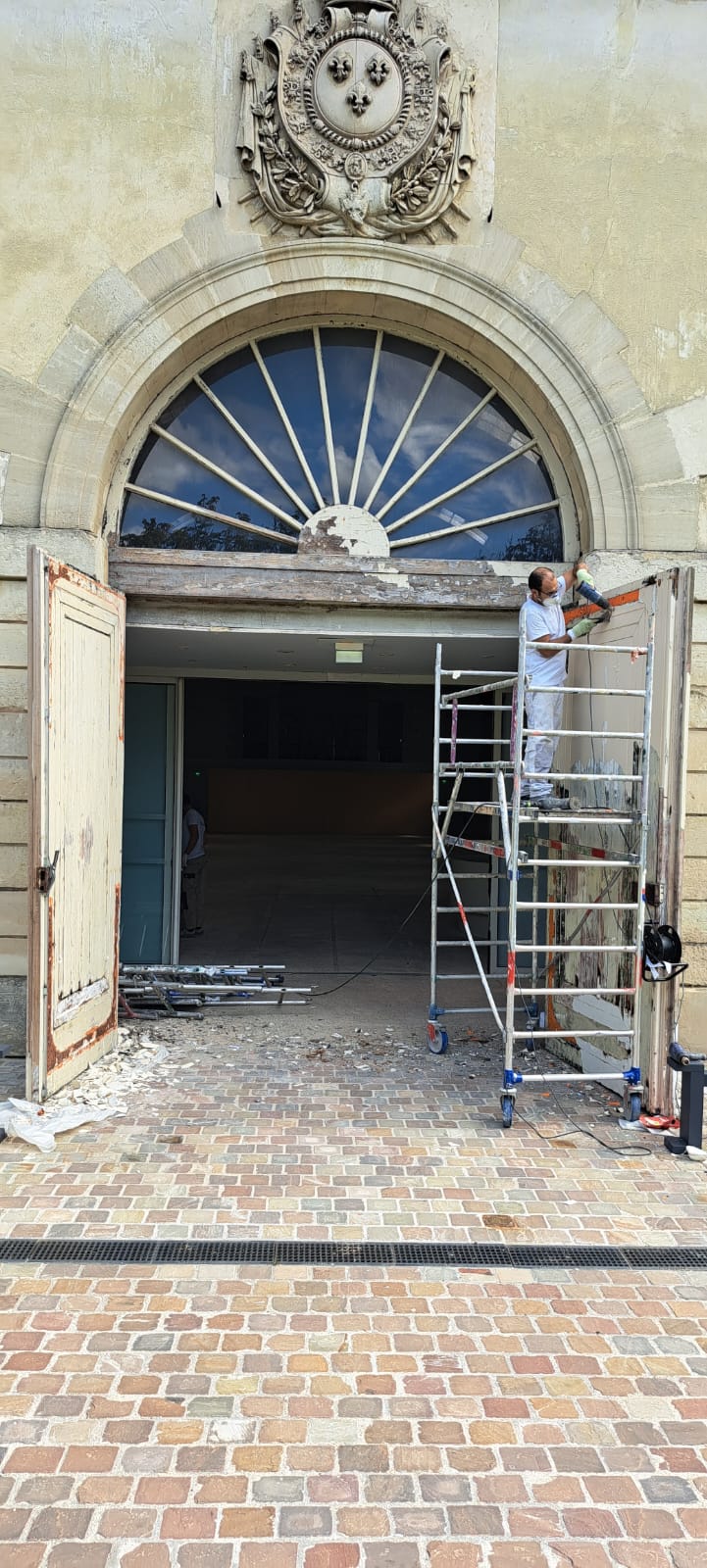
Here we are in Paris, on the esplanade of the Bourse du Commerce. The City of Paris regularly hoses down the cobblestones of the esplanade. The woodwork is in fact more dirty than anything else. The whitish deposit dulling the wood is limescale.

A rinse with clean water and a fresh coat of oil over a linseed-oil paint applied 6 years earlier were enough to give it a new lease of life.

Preserve your woodwork for generations to come

Discover our paints